How to make a grab-and-go bag for errands on foot or transit
· Editorial team newsfromchicago24.com
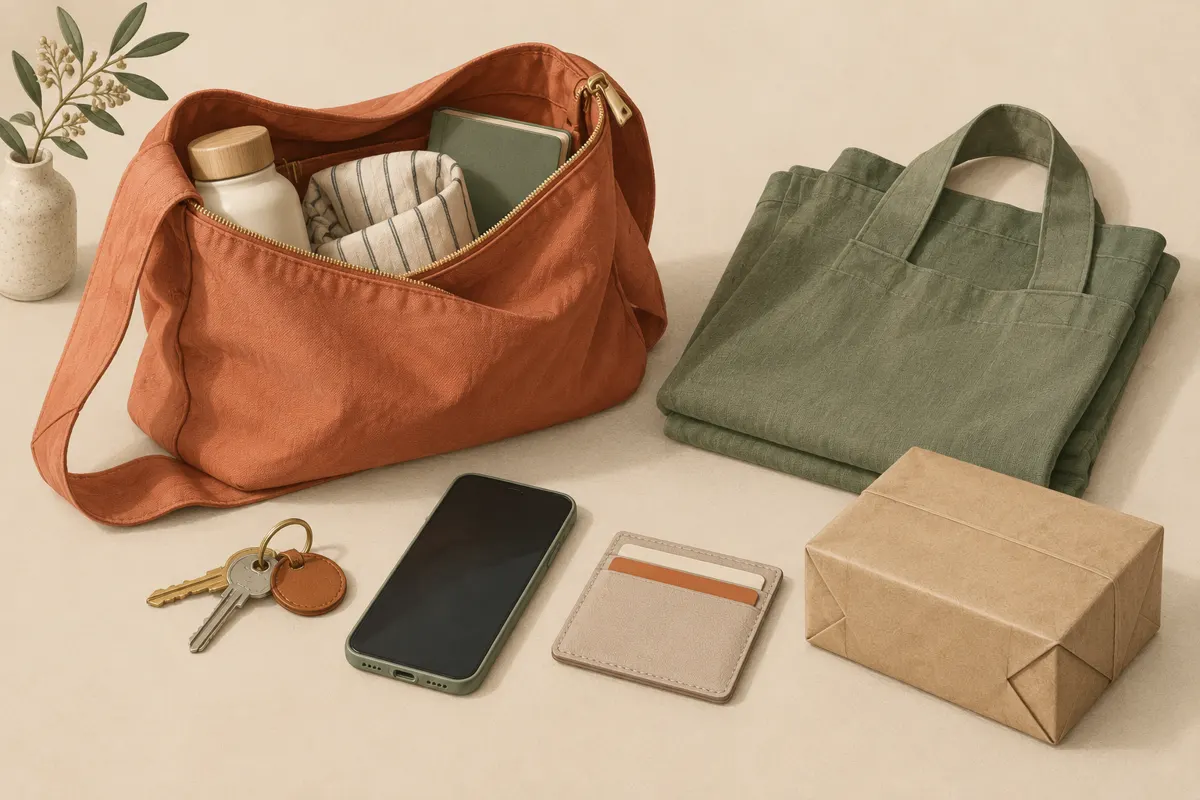
Pack your phone, keys, payment method, shopping list, and a folded reusable bag, then add only what your planned stops require. Keep returns separate from your everyday essentials and leave space for purchases. For errands on foot or transit, this proposed setup gives each item a place while keeping the load manageable.
Choose a bag for the trip home
Start with a bag you already own. Look for a lightweight body, a comfortable strap, a secure compartment for valuables, and pockets you can reach easily. Both supplied guides emphasize lightweight, hands-free designs and organized storage. A crossbody or belt bag can hold essentials for a short outing; a backpack may suit a trip with larger purchases.
Our proposed approach is to plan for what you will carry home. If your stops include groceries, a parcel pickup, and a return, put those outgoing items in the bag before leaving and check how much room remains. Leave the folded shopping bag accessible so you can expand your carrying space at checkout.
Adjust the straps with the bag packed. Walk around your home and check whether you can reach your payment method without removing everything. If the load already feels awkward, reduce it or split the errands before heading out.
Keep the everyday checklist short
Give your regular essentials fixed places. The guides identify a phone, wallet, and keys as core items, with additions such as a snack or charger for longer outings. Use the following proposed checklist as a starting point, then adapt it to your own needs.
- Phone, keys, and wallet or cardholder.
- Your usual transit fare card or payment method, if needed.
- A shopping list on your phone or a small piece of paper.
- One folded reusable shopping bag.
- Any receipt, return code, pickup notice, or other document required for today's stops.
Add items for the actual outing: a water bottle or snack for a longer trip, an umbrella if rain is expected, or a charger if you expect to need one. Include personal essentials you rely on. Avoid leaving every occasional item in the bag permanently; decide what belongs there before each trip.
Give returns their own space
For a trip with several stops, our proposal is to group everything you need for a return in one pouch, inner bag, or separate compartment. Keep the item and its paperwork together so you can hand it over without searching through your personal belongings.
- Check the return instructions before packing, including any packaging or accessories you need to bring.
- Put paper receipts in an envelope or pocket beside the return.
- Make sure you can open any required code or confirmation on your phone.
- Keep returns apart from food, drinks, and new purchases.
- After the return, fold away the empty inner bag to free space.
For more than one return, use a simple label on each envelope or keep each item's documents inside its own packaging. The aim is to make each stop easy to handle, especially when you are also holding a shopping bag.
Pack in the order you will need things
Accessible pockets are useful only if their contents match your routine. The proposed packing order below keeps frequently used items within reach and reserves the main compartment for things you handle less often.
- Place bulky items in the main compartment, keeping their weight balanced and leaving room for purchases.
- Keep any water bottle upright in a suitable pocket, apart from paperwork.
- Position the first return where you can remove it without unpacking the bag.
- Put your phone and payment method in a secure, reachable pocket. Give keys a separate pocket or clip.
- Place the folded reusable bag near the top, then close the bag and check that nothing is protruding.
Between stops, put your phone, wallet, and keys back in their usual places. On transit, arrange your belongings so you can keep the bag close and avoid spreading items across seats while searching for something.
Reset the bag when you get home
Finish by unpacking purchases, removing food and used tissues, and putting receipts where you keep them. Refold the reusable bag and return your regular essentials to their pockets. This proposed reset makes the next outing easier without turning your everyday bag into permanent storage.
Before leaving again, check three things: what today's stops require, how much space you need for the trip home, and whether the packed bag feels comfortable. If a purchase will be too bulky to carry comfortably, give it a separate trip.