How to roast vegetables together without leaving some undercooked
· Editorial team newsfromchicago24.com
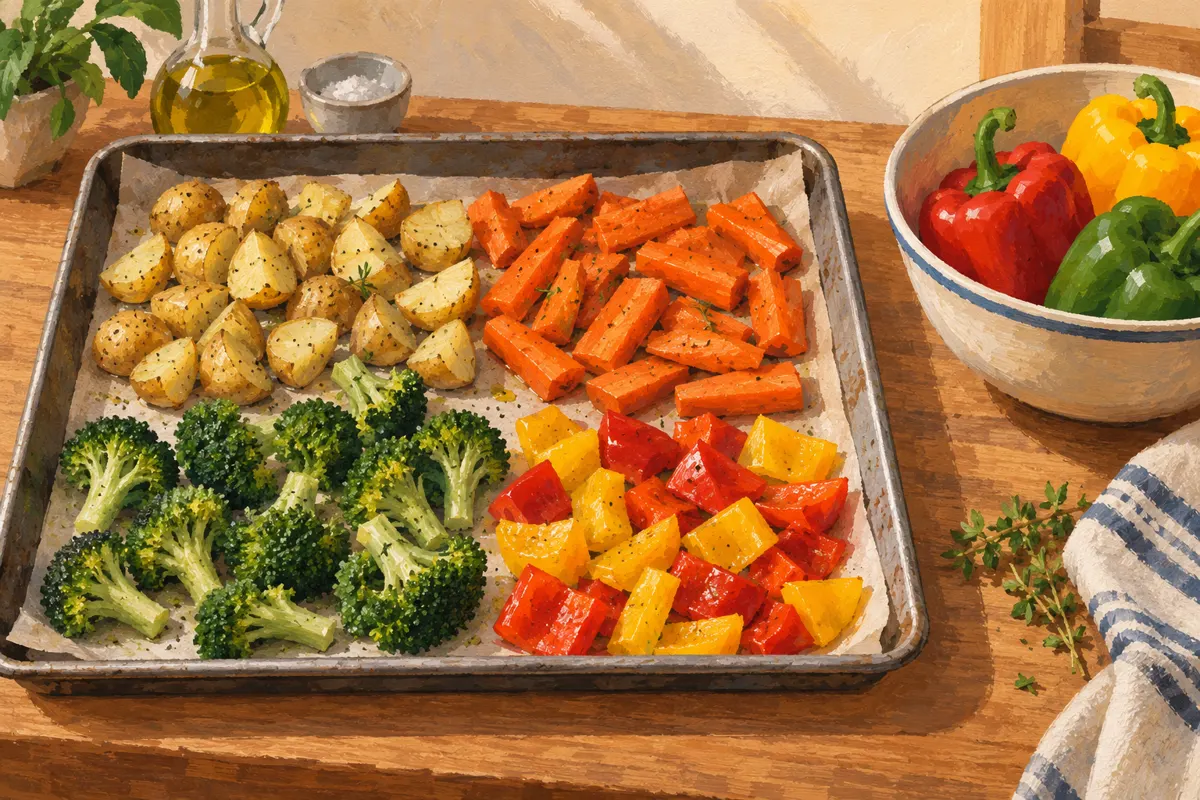
To roast different vegetables evenly, start dense vegetables first, add quicker-cooking ones later, and keep everything in a single, uncrowded layer. Cut potatoes and carrots smaller than softer vegetables, then check each variety for tenderness before taking the tray out. You can also use separate pans and combine the vegetables after roasting.
Group vegetables by how long they need
Before cutting, sort your vegetables into rough cooking groups. At 425°F, the following ranges offer a starting point. They are estimates: piece size and your preferred tenderness affect when each vegetable is ready.
- Longer cooking: potatoes, carrots, and beets generally need about 30–45 minutes.
- Middle group: broccoli, cauliflower, and Brussels sprouts generally need about 15–25 minutes.
- Quicker cooking: zucchini, bell peppers, asparagus, and green beans generally need about 10–20 minutes.
Broccoli and cauliflower are convenient partners because their cooking ranges overlap. Potatoes and carrots can also share a tray when cut appropriately. A mix spanning all three groups needs staggered additions or separate pans; putting everything in at once makes the finishing time harder to manage.
Adjust the cuts to match the vegetables
Uniform cutting matters within each vegetable, but every variety does not need identical dimensions. Dense vegetables benefit from smaller pieces, while faster-cooking ingredients can stay larger. Avoid a mixture of tiny potato scraps and large potato chunks: the scraps may finish while the chunks remain firm.
- Potatoes and sweet potatoes: aim for roughly 3/4-inch pieces.
- Carrots and parsnips: split thick sections lengthwise before cutting them into shorter pieces.
- Broccoli and cauliflower: make similarly sized florets and cut thick stems into smaller pieces.
- Brussels sprouts: halve them.
- Asparagus and green beans: trim the tough ends; they can generally stay whole.
Smaller cuts help close a timing gap, but they do not guarantee that potatoes and asparagus will finish together. When cooking times differ substantially, give the slower vegetable a head start.
Prepare a tray with room to brown
Preheat the oven to 425°F as a practical starting temperature for this method. After washing, dry the vegetables thoroughly. Toss each cooking group separately with oil, salt, and pepper so it is ready to add at the right moment.
Use enough oil for a light, even coating without leaving puddles. Spread the vegetables on a rimmed baking sheet with space between pieces. Crowding encourages steaming and makes browning harder. Plan for the final quantity, including the vegetables you will add later; use a second tray if necessary.
For a mix with plenty of zucchini or eggplant, consider a separate pan from the roots. These vegetables contain more moisture and can benefit from a different roasting approach. Combine the batches when they are done.
Add faster vegetables in stages
Here is a proposed starting schedule for potatoes, carrots, broccoli, and bell peppers at 425°F. Treat the times as checkpoints, and adjust according to what you see and feel.
- Start with the potatoes and carrots, prepared in small, consistent pieces and spread in one layer.
- After about 15 minutes, turn the roots and add the prepared broccoli, leaving space around the florets.
- About 10 minutes later, add the bell peppers. Use another pan if the first tray is becoming crowded.
- Begin checking all varieties around 35 minutes after the roots went in. Remove finished pieces and continue roasting anything still firm.
Keep varieties in loose sections so you can turn, check, and remove them easily. Rotate the tray partway through cooking if browning is uneven. With two trays, switch their upper and lower positions partway through.
Check tenderness before serving
Check both the centers and the edges. A fork should pierce the vegetables easily, and the surfaces should have some browning. Test a larger potato or carrot piece as well as a floret; one tender vegetable does not tell you whether the whole tray is ready.
If the broccoli is ready but the potatoes are still firm, transfer the broccoli to a serving dish and leave the potatoes in the oven. If everything is tender but pale, spread the pieces farther apart and continue roasting while watching their color. Combine the finished vegetables just before serving.